Edge-Computing Fabric for Autonomous Ports.
The Challenge
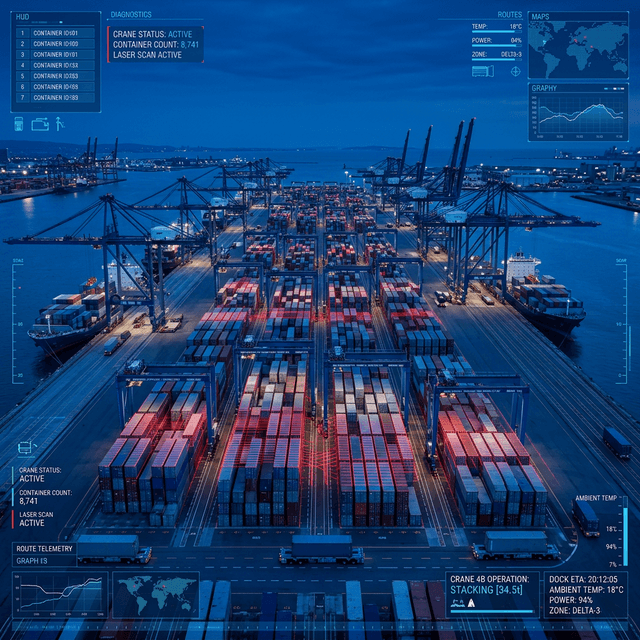
A global logistics operator needed to deploy autonomous crane operations and intelligent vessel pathing across three major shipping hubs. The existing centralized architecture introduced unacceptable latency for real-time operations, and network reliability between port facilities and cloud data centers was inconsistent.
Our Approach
We designed and deployed a distributed edge computing fabric that brought computational intelligence directly to the port facilities. Each hub was equipped with high-performance edge nodes running containerized microservices for real-time sensor fusion, path planning, and autonomous control. A mesh network ensured resilient communication between edge nodes with cloud synchronization for analytics and fleet management.
The Result
Operational latency was reduced by 30%, enabling safe and efficient autonomous crane operations. The system now monitors over $500M in port assets in real-time. Throughput increased by 22% across all three facilities, and the edge architecture demonstrated 99.99% availability, operating independently even during cloud connectivity interruptions.
Ready to architect your future?
Schedule a direct consultation with one of our senior system architects to map out your technical transformation.